On a Korean heating controller, 20 and 60 can appear together without meaning the
room is heading toward 60°C. Read the mode and the label beside each number before
turning the dial. This guide compares two actual manuals to explain which setting you
are looking at and which assumptions are unsafe to carry between models.
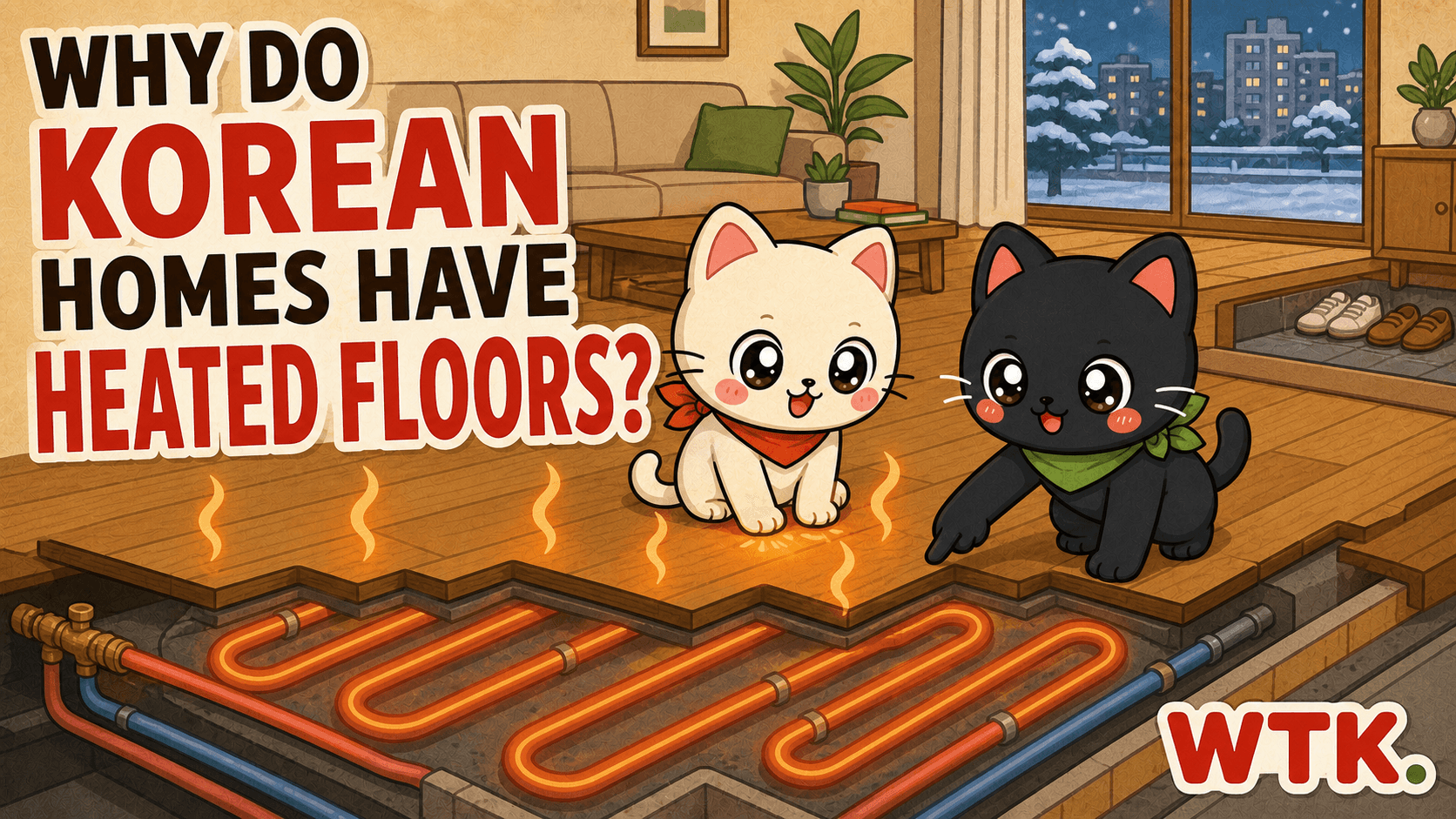
Korean floor heating continues the ondol tradition: the older system passed heat beneath the floor, while modern water-based systems use pipes carrying boiler-heated water. The Korean Film Council's ondol introduction describes that transition. It explains the warm floor, but it cannot tell you which buttons control the particular home you are staying in.
Identify the model, not just the brand
We read NCTR-60S instructions dated October 24, 2022 and NCTR-100B, version 1.0, whose filename is dated December 1, 2020, from the official Nanokem materials library on September 4, 2026. These are Kiturami controller documents, not current-model recommendations. The PDF covers identify the models; the instructions are available as NCTR-60S and NCTR-100B.
First compare the model printed on your controller with the cover, then check the connected boiler and your host's instructions. A similar-looking Wi-Fi variant is not automatically the same device. If the apartment uses another controller or a building heating system, use its own documentation; do not try these buttons experimentally.
Three temperature settings that are not interchangeable
This is our reading of the two manuals' normal user controls. The ranges below identify settings; they are not recommended temperatures.
| Label or function | NCTR-60S | NCTR-100B v1.0 | Reading consequence |
|---|---|---|---|
난방: room heating | 10–45°C setting range | 10–45°C setting range | A room target is different from the other temperature on the screen |
온돌: floor-heating control | 45–85°C; guide labels it floor heating | 45–85°C; explicitly identifies heating-water temperature | Do not read this as measured room-air or bare floor-surface temperature |
온수: domestic hot water | Separate button and setting | Separate button and setting | Changing it is not a substitute for changing room heat |
The source sections are NCTR-60S printed pages 1–5 and NCTR-100B printed pages 3–5 and 7, in the linked 60S and 100B manuals. Both distinguish the current-temperature area from the hot-water setting; the exact display changes with the selected function.
The 60S guide's use of “floor temperature” is less technically specific than the 100B guide's “heating-water temperature.” We have not measured either system's floor or verified a particular installation's sensor arrangement. The justified conclusion is the narrow one: do not treat all numbers ending in °C as the same measurement.
For a concrete reading exercise, the 100B diagram shows 20 on the left and 60
beneath the hot-water label on the right. That is a manufacturer diagram, not an
observed apartment. Translating both as “thermostat temperature” would erase the
distinction the diagram is trying to show.
“Two hours” can mean a pause, not 2 p.m.
Both manuals describe 예약 as repeated run time in minutes plus stop time in
hours. The 60S guide gives a 20-minute run and two-hour pause example; the 100B
manual lists those as initial settings. See printed page 7 of the
60S guide
and page 6 of the 100B manual.
Here is our arithmetic for that pair, not a heating recommendation:
- Two hours of stopping equals 120 minutes.
- One full repeat contains 120 + 20 = 140 minutes.
- The scheduled run-time share is 20 ÷ 140 ≈ 14.3%, not 20 ÷ 120 ≈ 16.7%.
Writing only “heats every two hours” loses whether those two hours include the run or
exclude it. Writing “starts at two” would be a different mistake: neither the 02
pause nor the 20-minute run is a clock-time appointment. Check 가동 (running),
정지 (stopped), 분 (minutes), and 시간 (hours) beside the values.
The 14.3% figure describes the selected schedule, not the gas bill, burner duty, energy saving, or time needed to warm the floor. This calculation has no measurement of fuel use, outdoor temperature, insulation, hot-water demand, or control overrides. We also do not infer which phase begins immediately after every possible button press.
Away mode has a model-specific definition
The 60S guide describes 외출 as maintaining a fixed 8°C room setting. The 100B
manual instead provides a table: operation at 7°C or below, no operation at
8°C or above. Those are different descriptions; they do not establish different
real-world bills. 60S printed page 6,
100B printed page 6.
This is why “always press away when leaving” is not a complete instruction. In the 100B manual, freeze protection requires the boiler to retain power and its gas supply; the same page gives different guidance for severe cold. A mode name cannot guarantee protection for exposed pipes, another boiler, or a building you have not checked. Do not disconnect the system as a generic savings trick. Have the host or building manager specify the correct cold-weather arrangement for that installation.
For general context, Seoul separately warns about keeping exposed boiler pipes warm. That is another reason not to reduce freeze prevention to a single wall-button label. Seoul cold-wave guidance, boiler pipes section.
Ask a question that gets a usable answer
Instead of “What temperature should I use?”, send the model and a photo of the current display to the host, with your intended action. Do not open the boiler casing or alter installer settings. Our example questions are:
- 이 숫자는 실내온도인가요, 난방수 온도인가요? — “Is this number room temperature or heating-water temperature?”
- 외출할 때 이 모델은 어떤 모드로 두어야 하나요? — “Which mode should this model be left in when I go out?”
- 온수만 쓰고 난방은 끄려면 어떻게 하나요? — “How do I use hot water without room heating?”
These are practice sentences, not an interview or a tested remote-support procedure. For leaks, error indications, or failure to heat, report the model and symptoms to the host or authorized service instead of escalating temperatures or attempting repairs.
A jjimjilbang visit is a separate setting with facility-controlled rooms and ticket conditions. For other household and travel questions, browse K-Life.
Sources
The two PDFs were downloaded from Nanokem's official library and all five/six PDF pages visually checked on September 4, 2026. Printed page numbers differ from PDF page numbers because several PDF pages contain two printed pages. No controller was operated, no home inspected, and no surface-temperature or energy test performed. We did not use inaccessible older Navien PDF links as verified operating instructions.